
Three Kings Day
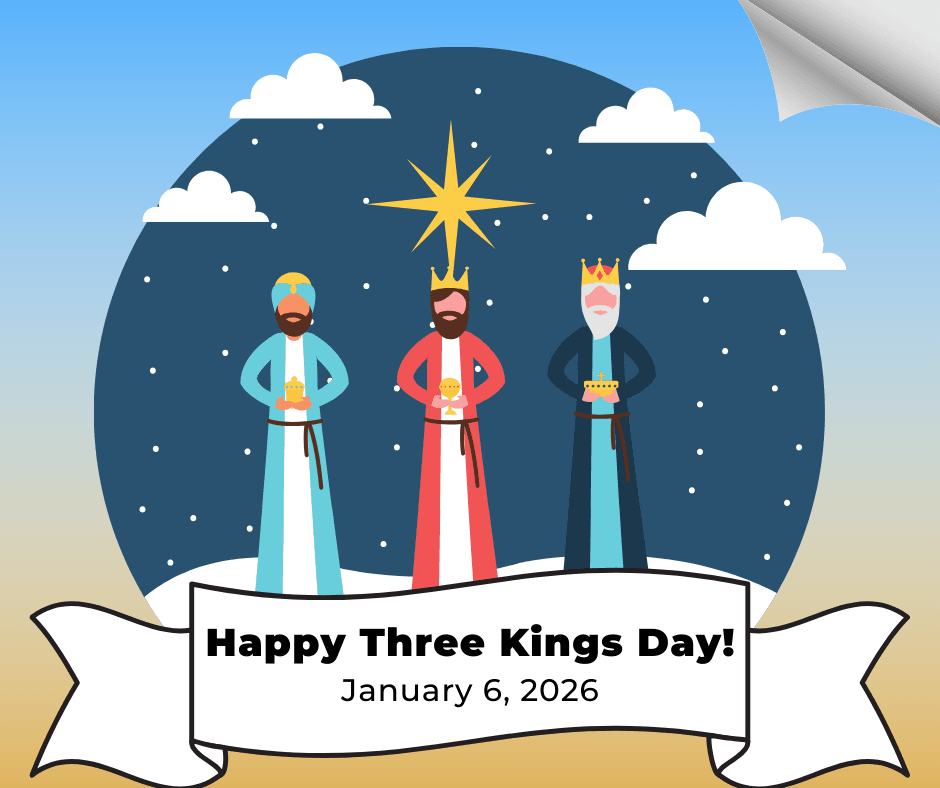
Three Kings' Day (or Día de los Reyes Magos/Epiphany) on January 6th celebrates the Christian story of the Three Wise Men (Magi) arriving to honor the baby Jesus, bringing gifts of gold, frankincense, and myrrh, marking the end of the Christmas season and often serving as the main gift-giving day in Hispanic cultures, where children leave shoes out for the kings. Celebrations include parades, special cakes like Rosca de Reyes, and traditions of leaving hay and water for the kings' camels.
Religious Significance (Epiphany)
Manifestation of Christ: The word "Epiphany" means "appearance" or "manifestation" (from Greek epiphaneia), signifying the revelation of Jesus to the world through these Gentile visitors.
End of Christmas: It traditionally concludes the twelve days of Christmas, with some traditions like Theophany in Orthodoxy focusing on Jesus' baptism.
Cultural Traditions (Día de los Reyes)
Gift-Giving: In Spain, Mexico, and Latin America, the Kings bring gifts, not Santa Claus.
Leaving Treats: Children leave their shoes (or by the Nativity scene) filled with hay/grass and water for the kings' camels on the night of January 5th.
Parades & Feasts: Parades feature floats of the Three Kings (Balthazar, Melchior, Gaspar).
Rosca de Reyes (King's Ring): A sweet bread cake decorated with candied fruits, often with a baby Jesus figurine baked inside; the finder hosts the next party.
France: A similar cake, galette des rois, has a hidden trinket, making the finder the "king" or "queen" for the day.
Key Takeaway
What: Commemorates the Wise Men's visit to Jesus.
When: January 6th.
Where: Widely celebrated in Hispanic and some European cultures.
How: Parades, special cakes, and gifts (often in shoes).
